

Six-inch gutters can provide added capacity for larger roof areas and concentrated valley flow, but they are not automatically the correct choice for every Durham home. CYM evaluates the roof and drainage system before recommending 5-inch or 6-inch K-style seamless gutters.
A practical comparison
5-Inch vs. 6-Inch Gutters for Durham Homes
The practical difference is the size of the channel available to receive runoff. A 6-inch gutter can be useful where a large roof plane, steeper pitch, long run or roof valley sends more water to one section. A well-planned 5-inch system may still be appropriate on smaller or less demanding roof areas.
CYM considers roof area, slope, valley locations, run length, the number and location of outlets, downspout routes and safe discharge points. The recommendation is based on the whole system, not an assumption that wider gutters solve every overflow problem.
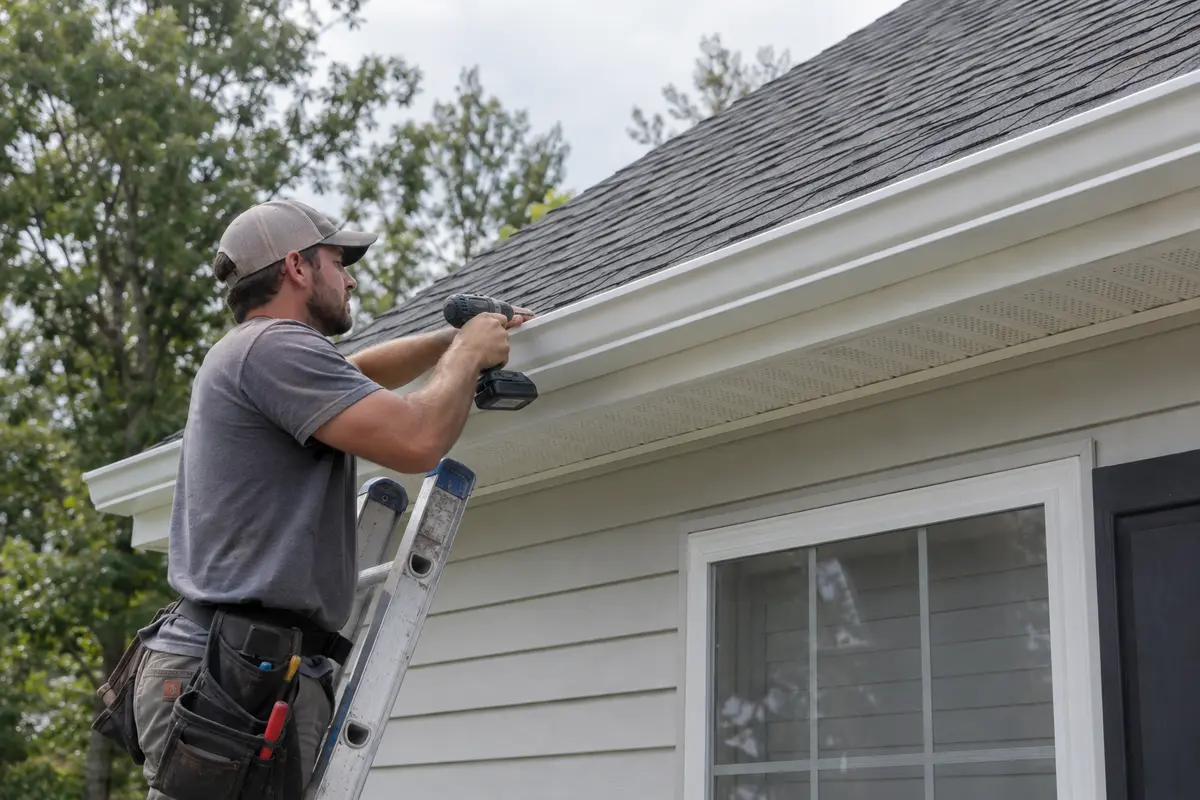
One drainage system
Capacity Depends on Pitch, Outlets and Downspouts
Water must move along the gutter, enter an outlet and travel through a downspout. Even a 6-inch gutter can hold water or overflow when pitch is poor, outlets are badly located or too few downspouts serve the roof area.
CYM commonly uses 3×4 downspouts when appropriate because the larger path complements higher-capacity gutters. Quantity and placement still matter: the goal is to move runoff reliably and discharge it at a practical location.
Made for the roofline
Why Seamless Gutters Are Fabricated On Site
After measuring the home, straight gutter runs are formed at the property as continuous pieces. Onsite fabrication matches each run to the roof edge and avoids unnecessary mid-run joints. Corners, end caps, outlets and downspouts remain planned connection points and must still be installed carefully.
Correct installation includes controlled pitch toward the outlets and secure attachment to sound fascia. If the existing system only needs maintenance, start with professional gutter cleaning in Durham. Localized leaks, loose sections or pitch issues may instead call for gutter repair.
Measured, formed and reviewed
CYM's 6-Inch Seamless Gutter Installation Process
Onsite Estimate
We inspect the roof edge, measure the project and review the drainage path.
System Planning
We recommend gutter size and plan practical outlet and downspout locations.
Onsite Fabrication
Seamless runs are formed at the property to match the measured roofline.
Installation
The system is secured with proper pitch and the planned outlets and downspouts.
Final Review
We clean the work area, take project photos and review the completed installation.
When larger is unnecessary
When a Durham Property May Not Need 6-Inch Gutters
A home may not need 6-inch gutters when roof areas are modest, runs are short, valleys do not concentrate unusual volumes and a properly pitched 5-inch system has adequate outlets and downspouts. Overflow caused by packed debris or a blocked outlet should also be corrected before assuming the gutter itself is undersized.
For the broader installation options, visit our Durham seamless gutter service. If tree debris is part of the decision, review gutter guards for Durham properties after the base system is correctly sized and draining.
Clear terms and local service
Installation Confidence From CYM Contractors
CYM Contractors has served Durham and the NC Triangle since 2017. We are fully insured, with a certificate of insurance available upon request. Covered installation work includes a 15-year workmanship warranty.
Standard projects require no deposit, with payment due upon completion. Larger projects may require a 30–40% deposit when stated in the approved proposal. Every recommendation begins with a free onsite estimate.
Straight answers
6-Inch Seamless Gutters Durham NC FAQs
Are 6-inch gutters always better for a Durham home?
No. Six-inch gutters can help on larger or high-flow roof areas, but a correctly planned 5-inch system may be appropriate for many homes. Roof area, slope, valleys, run length, outlets and downspouts should guide the choice.
What is the practical difference between 5-inch and 6-inch gutters?
A 6-inch gutter provides a larger channel for runoff, but width is only one part of capacity. Outlet size, downspout quantity and placement, pitch and the roof areas feeding each run determine how the complete system performs.
Are CYM seamless gutters made at the property?
Yes. Straight gutter runs are measured and formed on site, allowing each run to fit the Durham home without unnecessary mid-run seams.
Do 6-inch gutters use 3×4 downspouts?
We commonly use 3×4 downspouts when they fit the planned system. The number and location of outlets and downspouts are selected around roof runoff and practical discharge locations.
How do I request a free 6-inch gutter estimate in Durham?
Request a free onsite estimate through our contact page or call (919) 308-0106. We measure the roof edge and review the drainage path before recommending 5-inch or 6-inch gutters.