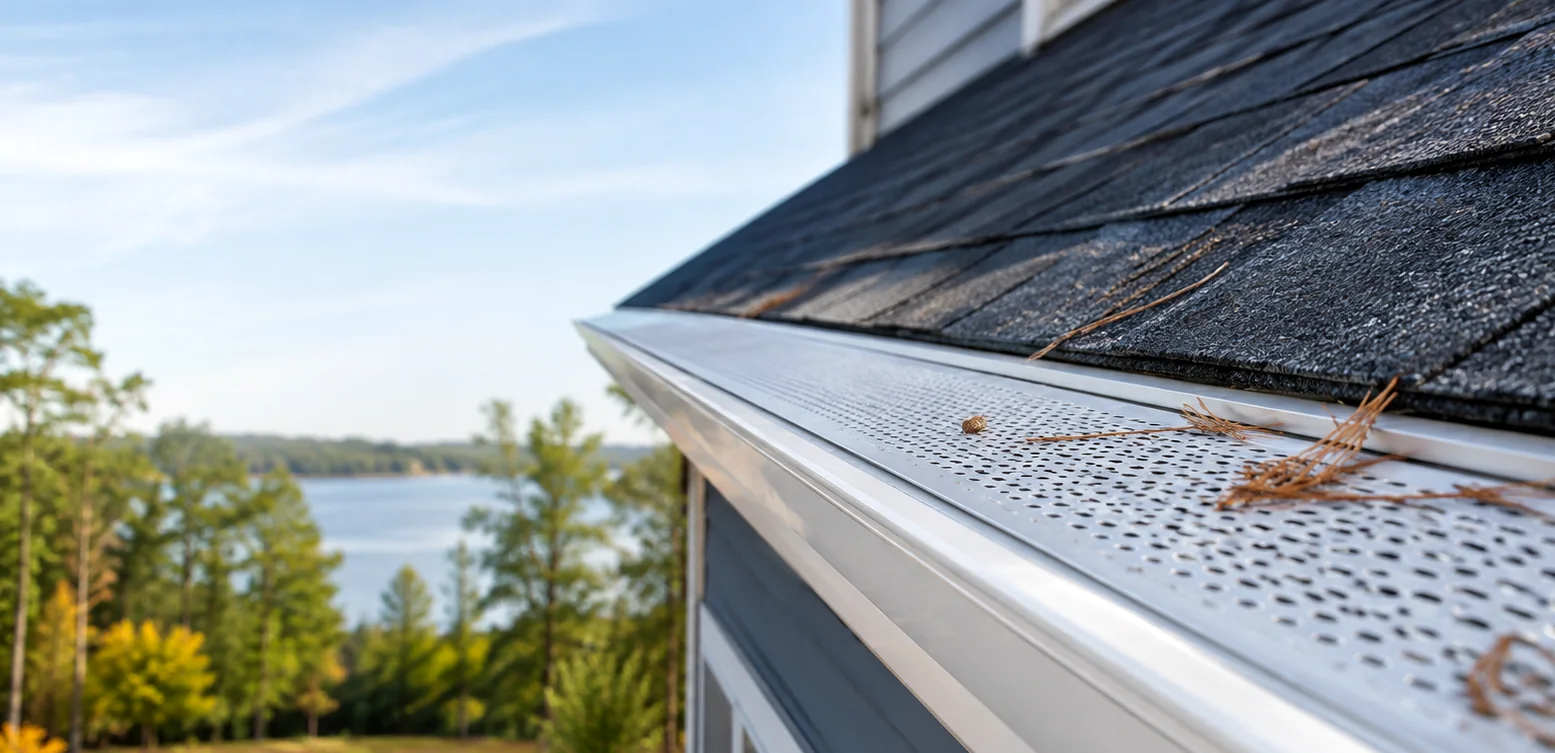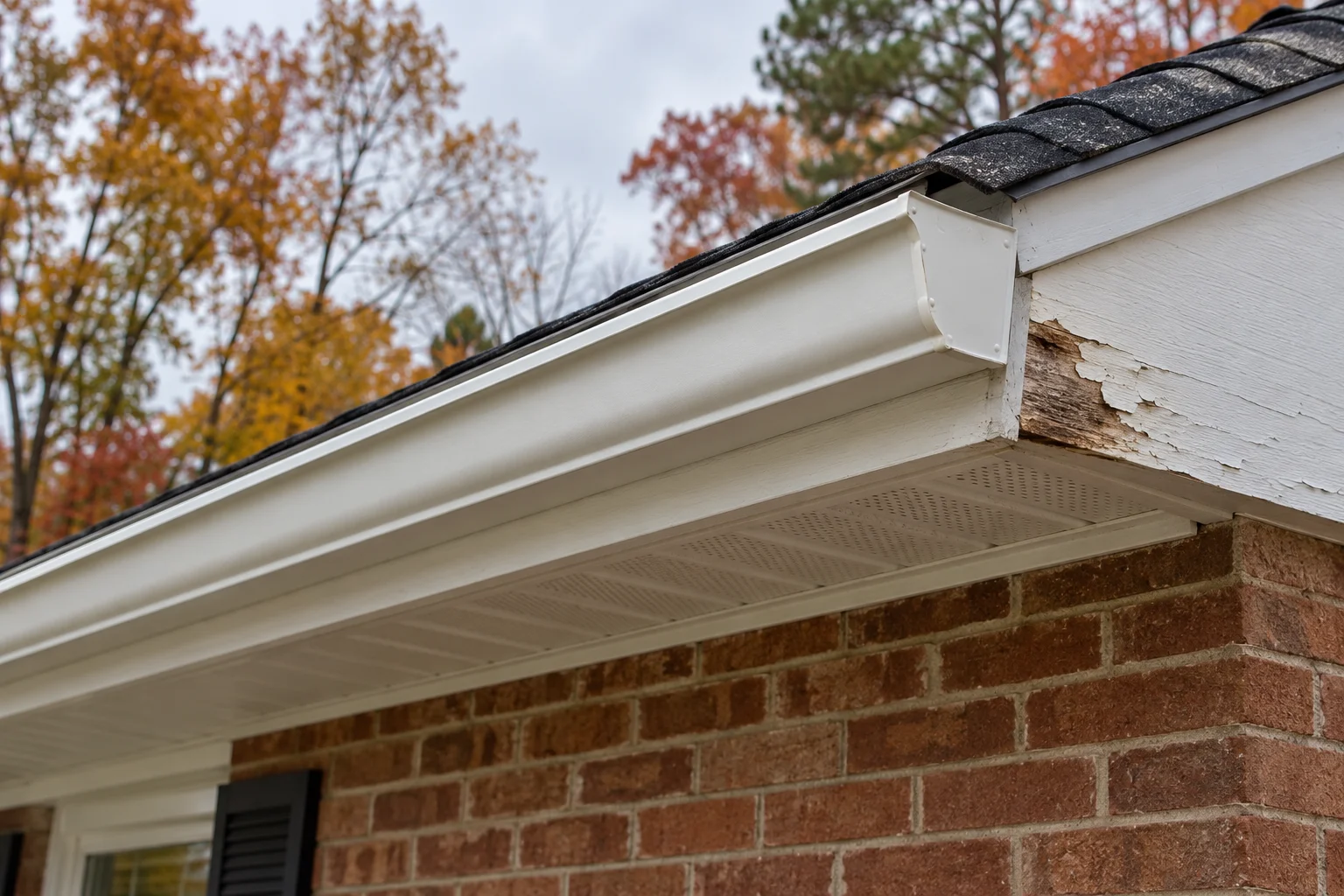
Before winter, look beyond the leaves in your gutters. The trim and panels around the roof edge help protect areas that are difficult to see from the yard. For a homeowner in Durham, NC, an autumn walk around the house can reveal a problem worth addressing before it becomes a larger repair.
This checklist explains what you can observe safely and what to ask during an estimate. For repair options, see CYM’s fascia and soffit services in Durham, NC. Photos and surface appearance can guide an inspection, but they cannot establish the condition of concealed wood.
First, know which part you are looking at
Fascia is the vertical board or finished face along the roof edge, often behind the gutter. Soffit is the underside of the roof overhang between the wall and the outer edge. Some soffit panels include openings that supply intake air to a vented attic.
These parts work alongside gutters, roofing and flashing. Replacing visible trim without finding out why it became wet can leave the original problem in place. Likewise, a loose gutter can involve fasteners or installation details without proving that the fascia is rotten.
A five-point roof-edge checklist for Durham, NC homeowners
- Look for peeling paint and recurring stains. Note the location and whether the mark returns after rain. Weathered paint alone does not confirm decay, but a recurring wet area needs investigation.
- Check for visible gaps or loose panels. Observe soffit edges from the ground. A panel hanging down or moving in the wind deserves prompt attention.
- Watch the gutter line. A section pulling away, an uneven run or water spilling behind the gutter should be assessed together with its attachment points.
- Compare corners and roof-to-wall transitions. Take a wide photo of the affected area and a closer photo from a safe position. These locations can help an estimator trace the water path.
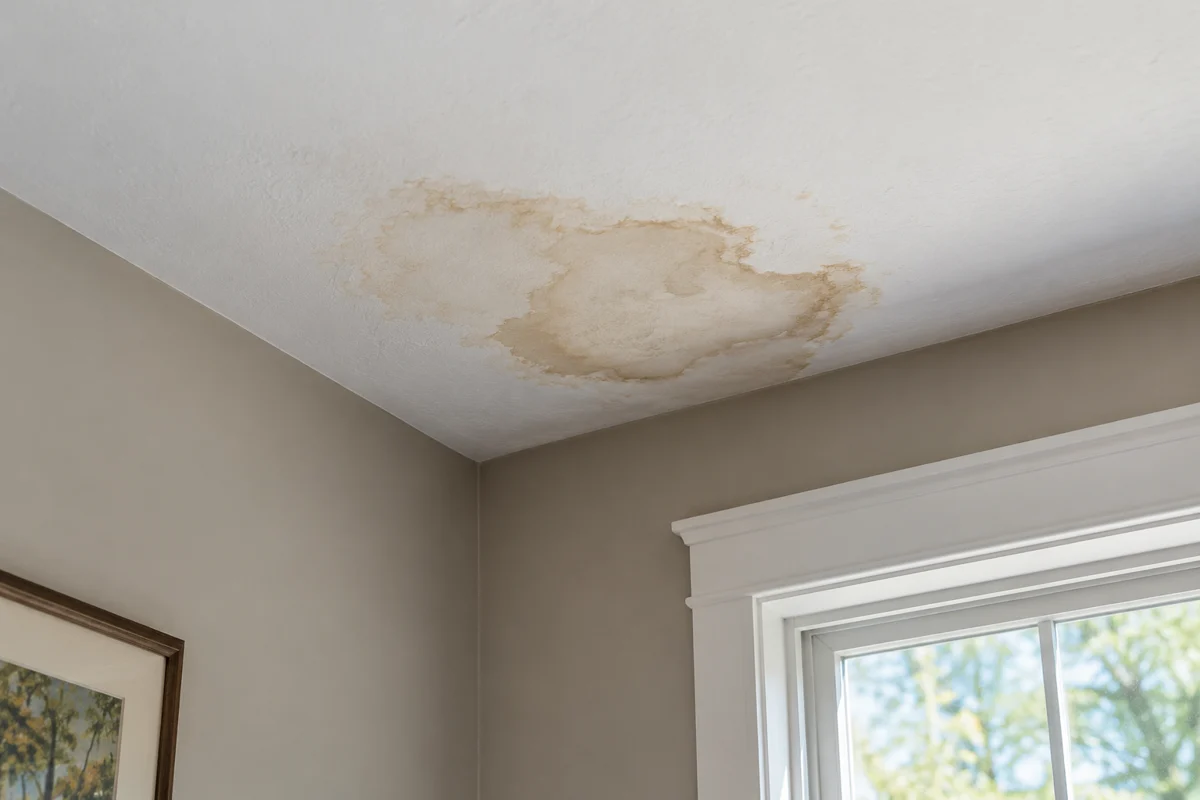
- Record related interior symptoms. A ceiling stain, damp attic smell or repeated leak may require a roofing assessment as well as exterior trim work.
Use the ground or a window with a safe view. Do not walk on a wet roof, probe boards from a ladder or pull loose panels down to inspect hidden damage. Keep people away from material that could fall.
Keep intentional soffit ventilation open
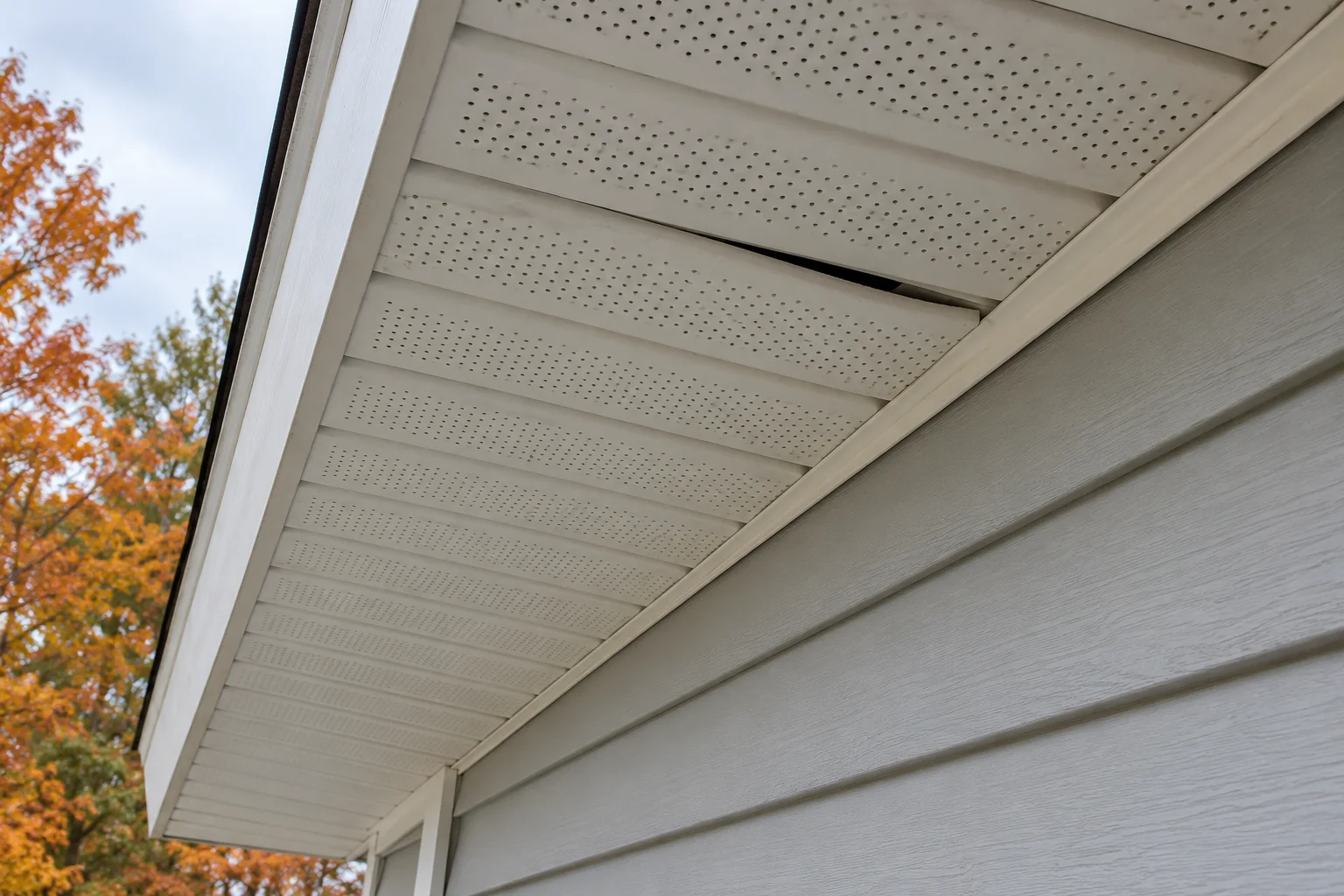
Not every opening is damage. On a vented attic, soffit vents can be part of the intake system. Painting over perforations, filling them with sealant or replacing vented material with a solid panel can interfere with that design.
GAF’s guidance on soffit and under-eave intake vents explains their role in attic ventilation. Ask the contractor how a repair will preserve the home’s intended intake and how any attic-side blockage will be assessed. Ventilation recommendations depend on the roof assembly; not every attic uses the same approach.
Find the cause before replacing the finish
If runoff repeatedly wets the fascia, assess the connected drainage details. Debris, a damaged gutter joint, loose attachment or roof-edge flashing problem can each require a different solution. Gutter cleaning may address debris, while gutter repair addresses a different scope. Cleaning alone will not restore deteriorated wood.
Where evidence points to shingles, flashing or a recurring leak, arrange a roofing assessment. If damage continues into the wall, include the adjoining siding and trim in the inspection. These are possible connections to evaluate, not a recommendation to replace every exterior component.
Repair a section or replace a longer run?
A localized repair may be reasonable when damage is isolated and the adjacent material can support a lasting repair. More extensive replacement may make sense when deterioration continues along the roof edge, repeated patches have failed or compatible materials are difficult to match.
The estimate should identify what is visible now and what will only be known after removal. Ask how concealed findings will be photographed, explained and priced before additional work proceeds. Covering deteriorated material with new metal or paint is not a substitute for an appropriate repair.
What should your written estimate include?
- The location and approximate extent of fascia or soffit work.
- Proposed materials, vented or solid panel details, and how adjoining finishes will meet.
- Whether gutter removal, reattachment or separate repairs are included.
- Preparation, priming and finishing where applicable.
- Access needs, cleanup and the process for approving concealed damage.
For a Durham, NC home, the schedule should reflect the actual work and suitable conditions for the specified products. Exterior painting and finish work depend on surface preparation, moisture and manufacturer temperature requirements. Do not rush a coating onto damp material just to finish before a calendar date.
When should you request an assessment?
Request prompt help for an active leak, hanging material or a gutter visibly separating from its support. For stable peeling paint or a small stain, document the area and arrange an assessment rather than assuming an emergency or ignoring a recurring symptom. The purpose of a pre-winter check is to choose the right repair while the scope is clear.
Plan fascia and soffit repairs in Durham, NC
Send CYM Contractors NC your full property address, the location of the concern and photos taken safely from the ground. Tell us whether you have seen leaking, loose panels or gutter separation so we can discuss the appropriate assessment and repair scope.
Request a Free Estimate or call 919-308-0106.