Gutter vacuums can work well for loose leaves and accessible debris, but they are not automatically the best method for every Durham home. Results depend on debris type, moisture, gutter shape, roofline access, downspout condition and how thoroughly the completed work is verified. Traditional cleaning can provide closer physical access, yet it also requires appropriate professional safety procedures. The quality of the service depends on the complete process—not merely the tool used.
For a homeowner comparing options, the useful question is not “Which machine wins?” It is “Which safe method will remove the material present, allow appropriate inspection and confirm that water has a clear path through the visible system?” A professional Durham gutter cleaning evaluation should account for the property rather than force every roofline into one approach.
What Is Gutter Vacuum Cleaning?
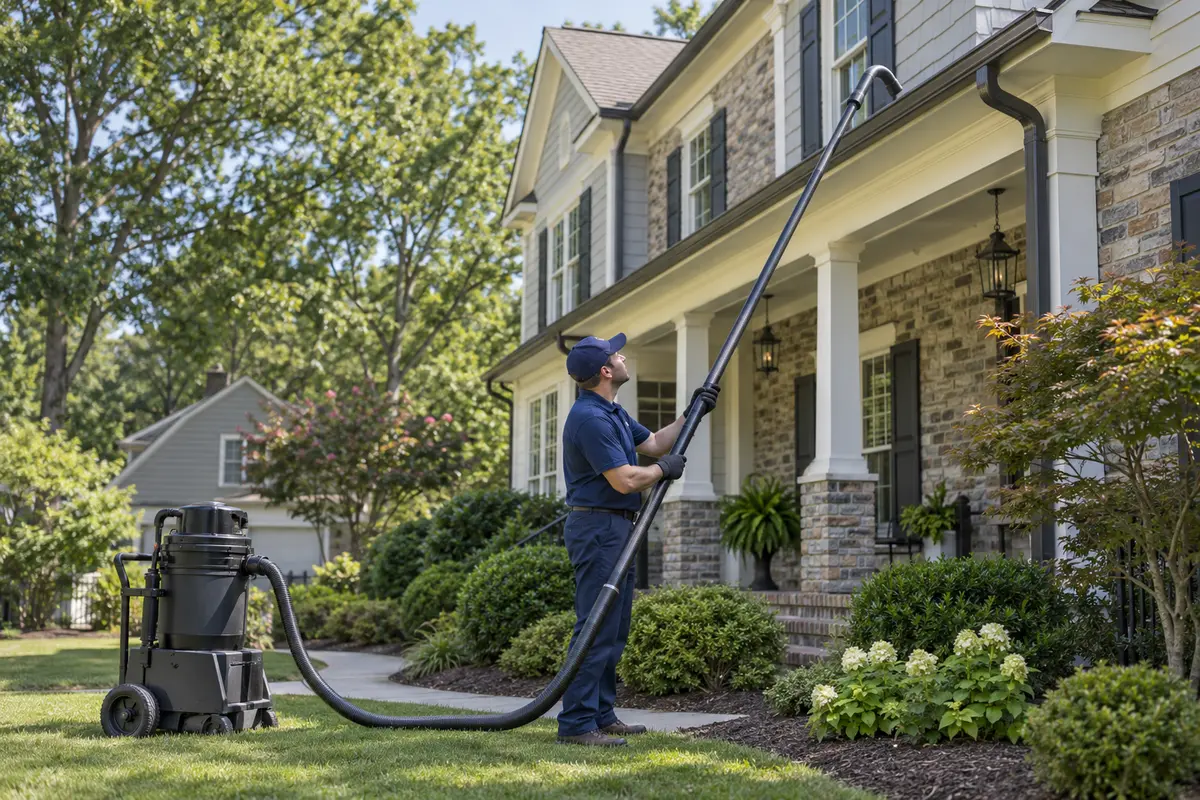
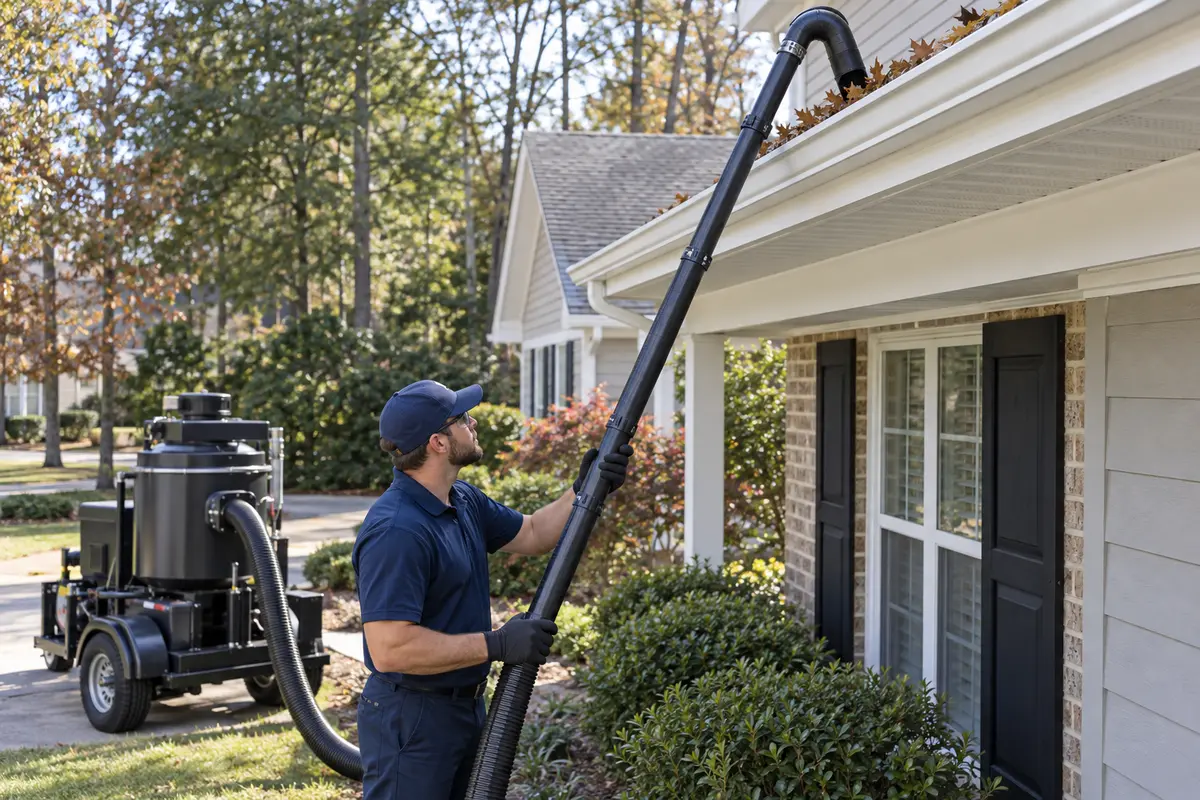
Professional ground-based gutter vacuum systems typically combine a high-capacity suction unit with long, rigid poles and specialized gutter nozzles. Some operators also use a pole-mounted camera to see the channel before, during or after cleaning. Working from the ground can reduce ladder use and may make routine debris removal efficient on suitable rooflines.
The method remains dependent on access and verification. A nozzle has to reach the relevant sections, move around corners and hangers, and remove rather than simply rearrange debris. Camera visibility, suction power, pole control and operator experience all influence the result. That is why a vacuum is best understood as one professional tool within a broader gutter cleaning process, not as an automatic guarantee.
When Does a Gutter Vacuum Work Well?
Vacuuming is often well suited to loose leaves, dry roof grit and other movable debris in accessible K-style gutters. It can be practical for routine maintenance, straightforward rooflines and properties where reducing ladder use is beneficial. It is particularly useful when the operator can see the channel or otherwise verify that the gutter and reachable outlets are clean.
Good results still depend on equipment capacity, correct pole and nozzle selection, operator experience and the condition of the material. Dry oak leaves behave differently from wet pine needles or decomposed organic matter. A capable service provider should evaluate those conditions first and adapt the process rather than assuming one setup will perform equally everywhere.
What Are the Possible Limitations of Ground-Based Vacuuming?
Depending on the equipment and process, wet or compacted debris can be harder to lift. Pine needles and decomposed material may form dense mats, while small pieces can lodge beneath hangers. Difficult corners, narrow outlets and material packed around a downspout opening may also require extra attention or another technique.
Ground-based work can limit hands-on examination of seams, hangers, fascia and gutter attachment unless the service includes effective visual inspection. Most importantly, a visibly clean channel does not automatically confirm that every downspout—or any buried pipe connected below it—is clear. These are potential limitations, not proof that vacuum cleaning always misses a condition. Careful inspection and verification can address many of them.
What Does Traditional Gutter Cleaning Involve?
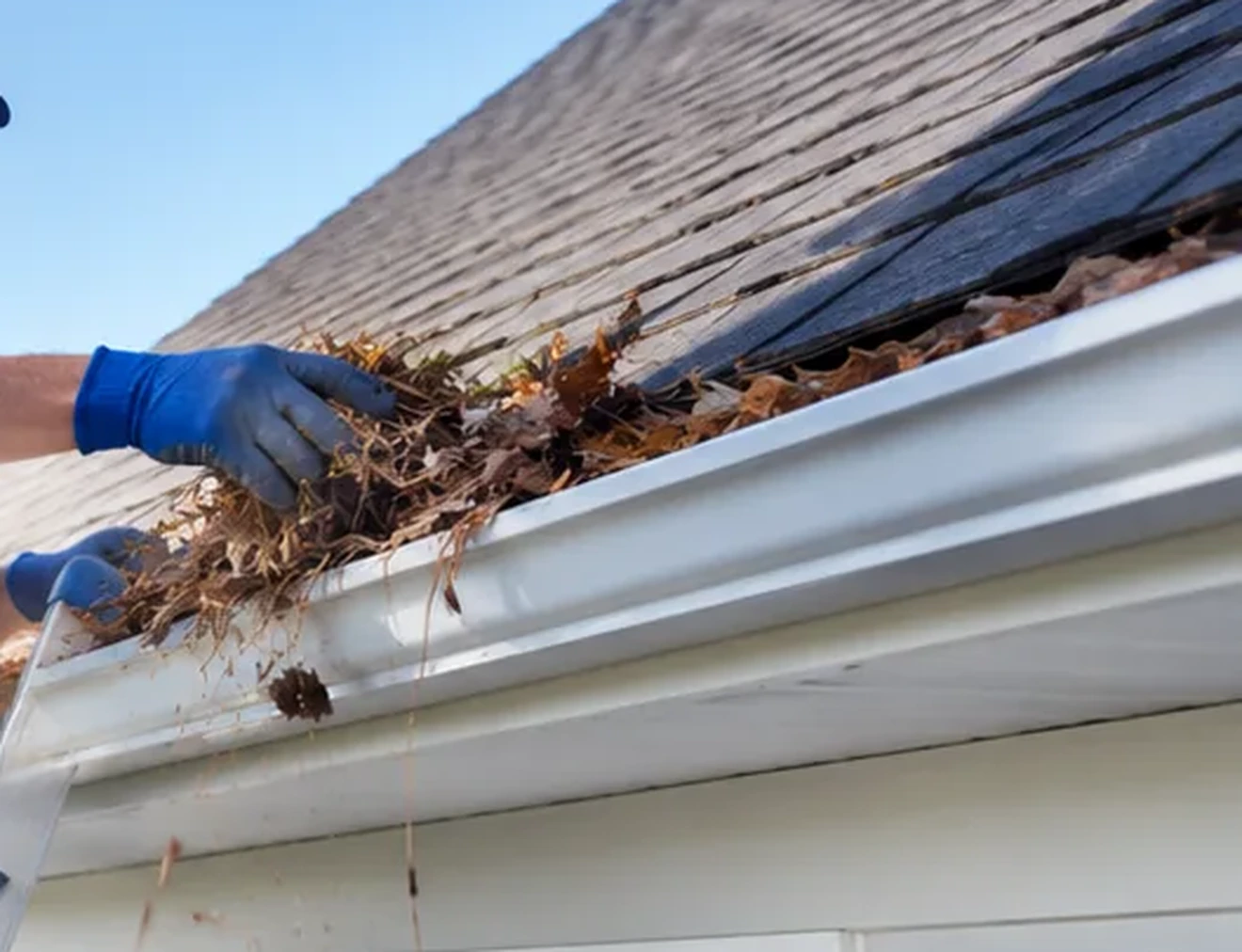
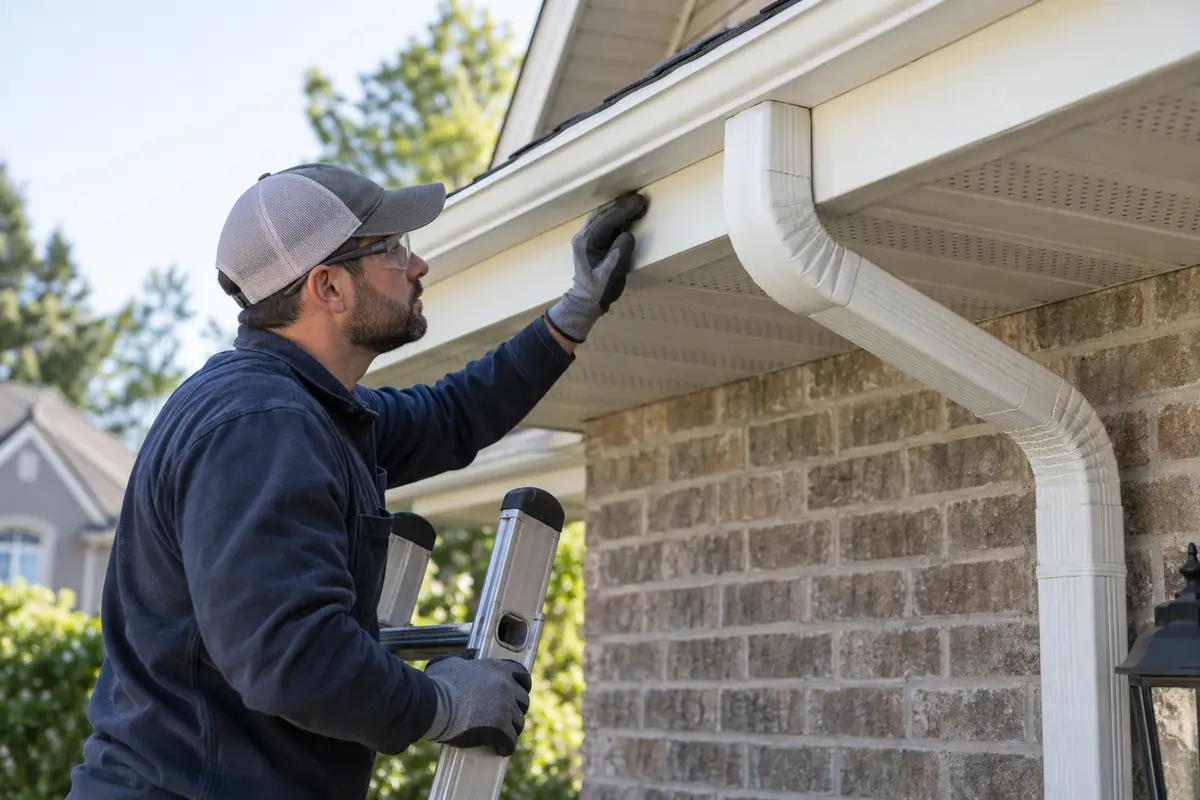
Professional traditional cleaning may involve controlled access to the roof edge, physical removal of debris, collection of waste, clearing reachable outlets and checking visible water flow when appropriate. Close access can make it easier to feel compacted material and examine visible seams, hangers, fascia, outlet connections and gutter attachment.
Working at height involves serious safety risks and should be handled with appropriate professional procedures. Homeowners should not climb a ladder or walk a roof to compare cleaning methods. The OSHA construction fall-protection resource explains why planning and proper controls matter whenever work is performed above ground.
Gutter Vacuum vs. Traditional Gutter Cleaning
| Factor | Ground-based vacuum | Traditional professional cleaning |
|---|---|---|
| Best use cases | Routine maintenance and accessible runs | Conditions needing close access or physical removal |
| Loose debris | Often effective with suitable suction and nozzle access | Can be removed and collected directly |
| Wet or compacted debris | May require more time, power or another technique | Close physical removal may help |
| Close visual inspection | May use a pole camera or other verification | Can permit a closer view when safely accessible |
| Access requirements | Often operated from the ground | May require controlled ladder or roof-edge access |
| Visible components | Camera detail depends on angle and image quality | May allow direct examination of hangers, seams and fascia |
| Cleanup | Debris is contained by the vacuum system | Debris should be collected and removed from the property |
| Downspout verification | Neither method alone proves the full drainage path; verification must be part of the scope | |
| Limitations | Reach, compacted debris and camera visibility can matter | Safe access, roofline complexity and working-at-height controls can matter |
There is no universal winner. The correct method depends on the property, and inspection and verification are just as important as debris removal.
Does Gutter Cleaning Include Downspouts?
The visible gutter channel and the downspout are related parts of the same roof-drainage system. Removing debris from the channel does not automatically prove that the outlet, elbows and full vertical run are flowing correctly. A professional service should clearly define what will be cleaned or evaluated, including whether accessible visible downspout flow will be checked when appropriate.
An obstruction inside an underground drainage line is different from ordinary gutter debris removal. Homeowners investigating repeated overflow may find the Durham downspout planning guide helpful, but a property-specific inspection is still necessary.
Exterior Downspouts vs. Underground Drainage Pipes
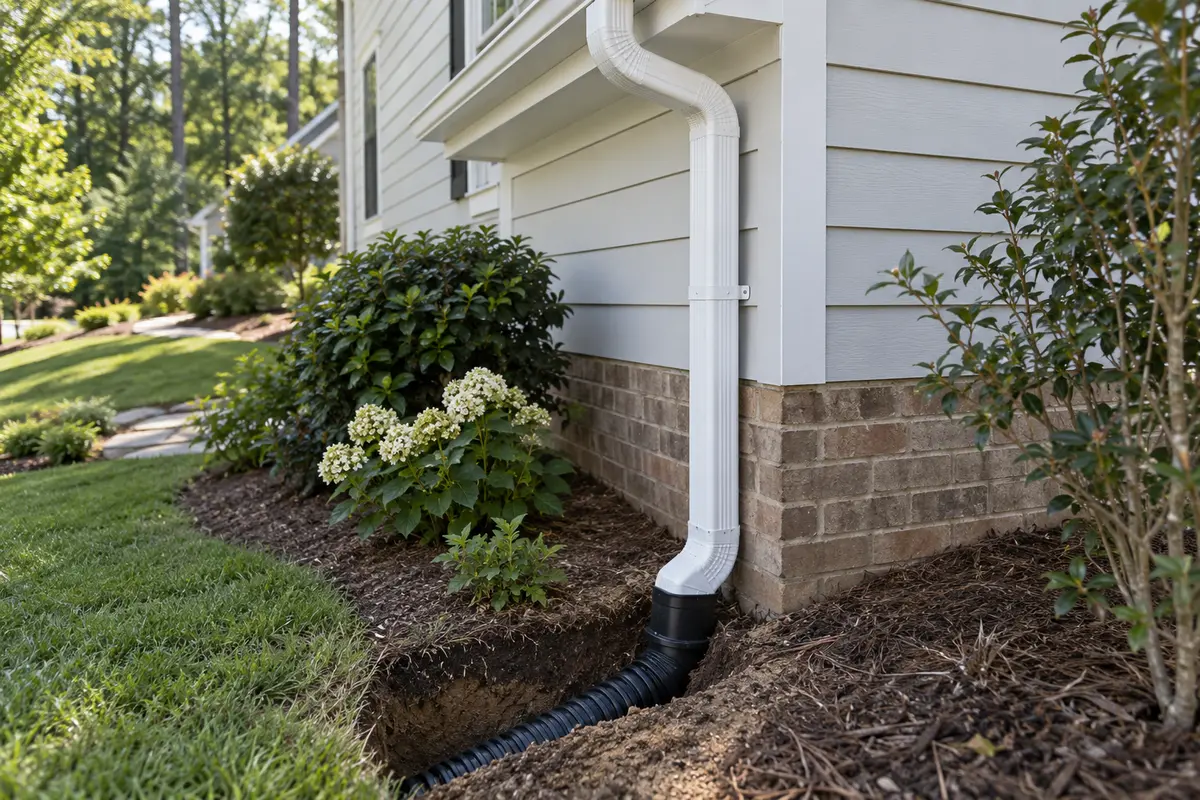
An exterior downspout is the visible vertical component that carries roof water from the gutter toward the ground. An underground drainage line is a buried pipe that may continue carrying that water away from the foundation. Although they can be connected, they are not the same service component.
Buried drainage problems may require separate diagnostic cameras, locating equipment, clearing tools or a specialized drainage service. Standard gutter cleaning should not be assumed to include repair or clearing of every underground system.
Why Inspection Matters as Much as Debris Removal
A useful inspection looks beyond leaves. Visible gutter pitch, loose or damaged hangers, open or leaking seams, outlet obstructions, overflow staining and fascia deterioration can show whether cleaning alone is sufficient. Downspout elbows, disconnected extensions and roof valleys that concentrate water deserve attention as well.
Identifying a concern does not mean that a standard cleaning automatically includes repair. It gives the homeowner a clearer understanding of the system and whether a separate gutter repair evaluation or broader work may be appropriate.
What Works Best for Durham and Triangle Homes?
Durham and Triangle properties often combine mature hardwoods with pines, producing broad leaves, needles and fine organic material at different times. Humid conditions can turn dry debris into a compacted layer. Heavy rain and mixed rooflines can send concentrated water from valleys into short gutter sections, making outlet condition especially important.
Some homes also connect downspouts to underground drainage. Those site conditions favor a flexible approach: choose the removal method for the debris and access, then verify the visible water path. The Triangle fall gutter-cleaning guide provides seasonal timing context for wooded properties.
Can Gutter Guards Reduce Future Cleaning?
Gutter guards can reduce certain debris but do not make a system maintenance-free. Micro-mesh can block smaller material at the surface, while perforated aluminum systems use openings to admit water and limit larger leaves. Either type can collect material above the gutter, particularly below valleys or heavy tree cover.
Selection should match the debris type, roof conditions and existing gutter system. CYM’s gutter guard service explains how protection options fit within the complete roof-water path. Gutters, outlets and visible guard surfaces still need periodic checks.
How CYM Contractors Approaches Gutter Cleaning
CYM Contractors evaluates the property, visible debris, access, gutter condition and drainage concerns before recommending an approach. The objective is not simply to remove visible leaves; it is to understand whether water has a clear, appropriate path through the visible gutter and downspout system. When a system has broader condition or capacity concerns, homeowners can also review CYM’s seamless gutter services.
Frequently Asked Questions
Can gutters be completely cleaned from the ground?
Sometimes. Ground-based equipment can remove accessible debris, but the result depends on roofline access, debris condition and whether the operator can verify outlets, corners and the finished gutter channel.
Is gutter vacuum cleaning better than cleaning by hand?
Neither method is universally better. Vacuuming can suit loose debris and accessible runs, while controlled close access may be more useful for compacted material or detailed visual inspection.
Can a gutter vacuum remove wet or compacted debris?
It may, depending on the equipment, debris depth and gutter layout. Wet, decomposed or tightly packed material can require a different technique and careful verification.
Does professional gutter cleaning include downspouts?
Service scopes vary. Ask whether accessible outlets and visible downspout flow will be evaluated, because clearing the gutter channel alone does not prove the full downspout is open.
Does gutter cleaning clear underground drainage pipes?
Not automatically. A buried drainage line is separate from the visible gutter and downspout system and may require different diagnostic or clearing equipment.
How often should gutters be cleaned in Durham, NC?
Frequency depends on nearby trees, roof valleys, gutter guards and storm exposure. Many homes benefit from spring and late-fall checks, while heavily wooded properties may need more frequent service.
Do gutter guards eliminate the need for gutter cleaning?
No. Guards can reduce certain debris, but their surfaces, roof valleys, gutters and outlets still need periodic inspection and maintenance.