Roof storm damage in Chapel Hill, NC does not always begin with water pouring through the ceiling. Wind can affect a shingle seal, hail can disturb the protective surface, and a falling limb can damage a small area that is difficult to see from the yard. Water may also travel along decking or framing before the interior stain appears.
This guide explains seven warning signs homeowners can check without stepping onto the roof. It also separates urgent water-entry problems from conditions that can be documented and inspected. Homeowners ready for an onsite assessment can review CYM Contractors’ roof repair and replacement service in Chapel Hill.
Why Chapel Hill roofs need a careful post-storm check
Chapel Hill’s mature tree canopy creates both shade and storm exposure. Wind can move branches against shingles, deposit twigs in valleys and load one roof slope more heavily than another. Shaded sections may remain damp longer, while steep or multi-plane roofs can hide damage from a normal ground-level view.
Not every storm damages every roof. The useful question is whether something changed: a shingle is missing, a metal component is bent, debris struck the roof, an interior stain is new, or water now appears where the home remained dry before. Documenting the change helps a contractor distinguish a recent event from ordinary aging.
1. Missing, shifted or visibly lifted shingles
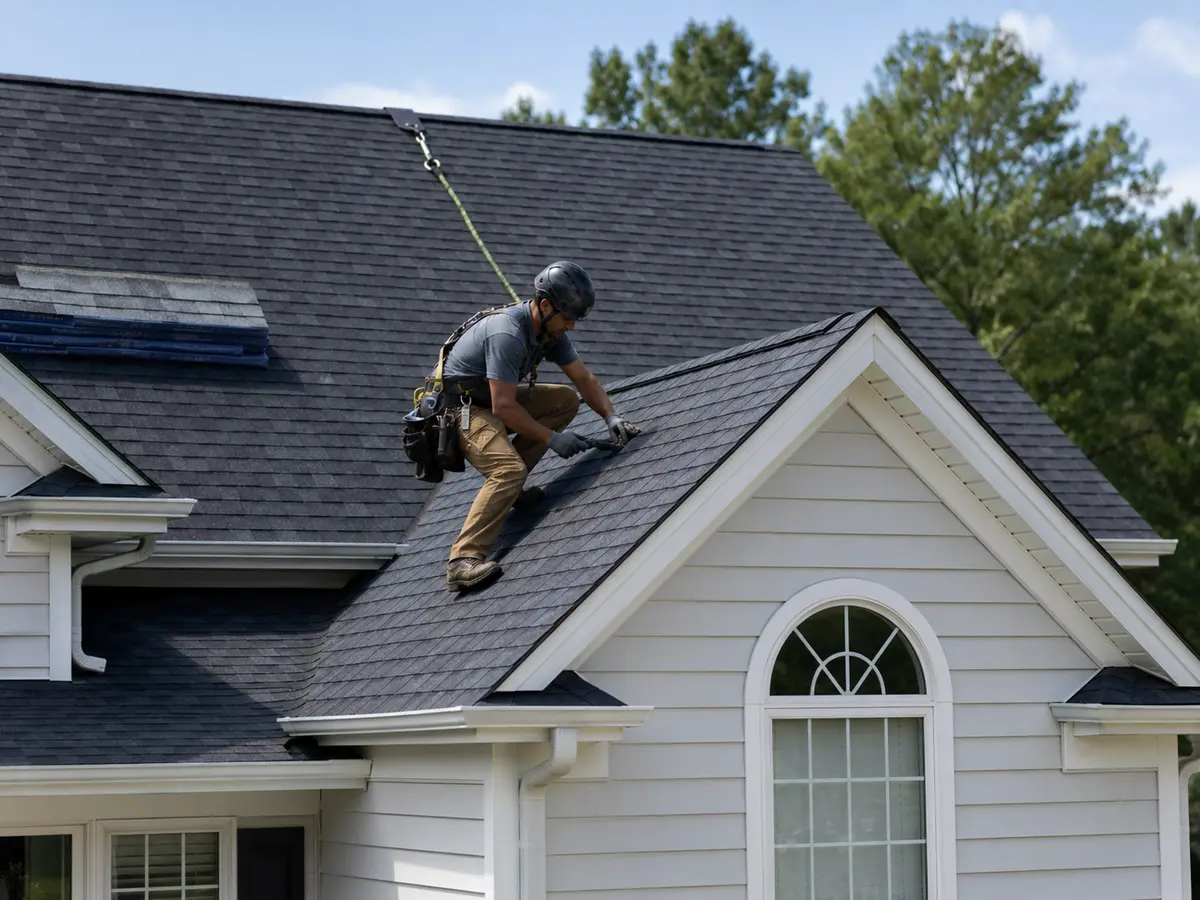
From the ground, scan the roof edges, ridge, hips and open slopes for an obvious gap or a shingle tab that no longer aligns with the surrounding rows. High wind can remove a shingle completely, but it can also lift an edge, weaken the adhesive seal or crease the material before it settles back down.
A missing shingle can expose the layer beneath it to rain. A lifted or creased shingle may be less obvious and should not be diagnosed from a distant photograph alone. Do not try to press it back into place from a ladder.
2. Shingle pieces or unusual granules near the house
After the storm passes, look around the yard, driveway and downspout discharge areas for torn shingle pieces. Also note whether an unusual amount of dark, sand-like granules appeared suddenly. Asphalt shingles naturally release some granules as they age, so granules alone do not prove recent hail damage.
The more useful comparison is with the roof’s normal condition. Fresh exposed asphalt, a sudden concentrated accumulation or matching damage on nearby soft metal can justify a closer inspection.
3. Dented, bent or displaced roof metal
Metal components can provide visible clues after hail, wind or falling debris. From a safe location, look at accessible vents, flashing, gutters and downspouts for new dents, bends or displaced sections. Damage at a chimney, wall intersection or pipe penetration deserves attention because those areas depend on correctly fitted flashing.

4. Branches, punctures or fresh debris on the roof
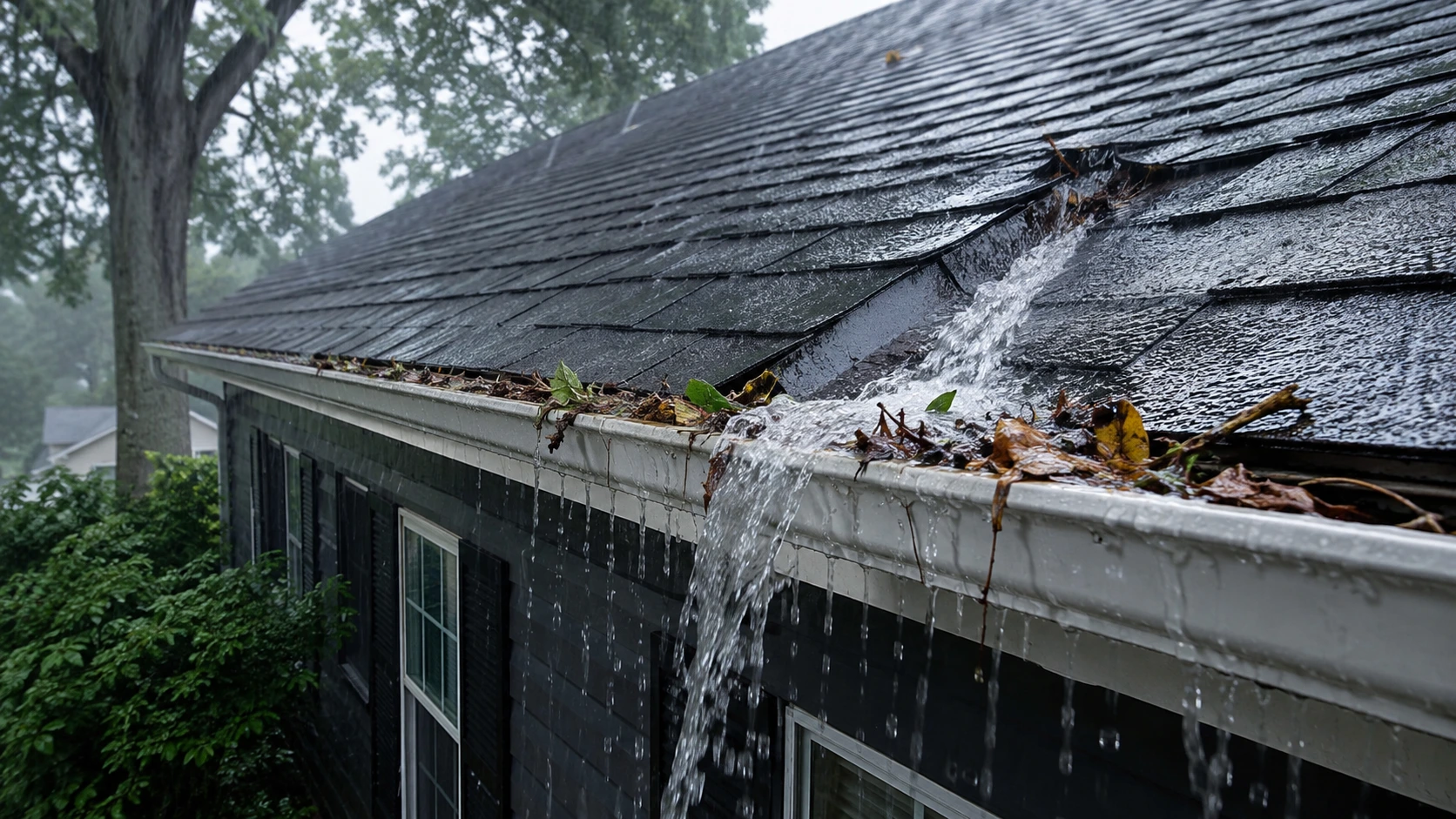
A large limb does not need to enter the attic to damage the roof. Impact can crack shingles, disturb flashing or affect the decking beneath a small area. Leaves and smaller branches can also collect in valleys and prevent water from following its intended path.
Do not pull a heavy branch from the roof yourself. Its weight may be masking an opening, and moving it can create additional damage or a fall hazard. Photograph the condition from the ground and keep people away from the area below until it can be evaluated safely.
5. New ceiling stains, attic moisture or musty odors
Interior evidence may appear as a brown ceiling ring, bubbling paint, damp insulation, a drip near a light fixture or a new musty odor. Water can enter at one roof detail and travel before becoming visible, so the stain may not sit directly below the exterior defect.
If water is near electrical wiring or a ceiling is bulging, keep clear of the area and treat it as urgent. In an accessible attic, observe from a safe platform and avoid stepping between framing members. Wet insulation and dark decking can help identify the affected zone, but the exterior source still needs to be traced.
6. Gutter, fascia or roof-edge changes
The roof edge can reveal what happened above it. Look for a gutter pulled away from the fascia, a bent section, new staining, displaced metal or heavy debris near a valley. A downspout that suddenly releases many granules may also justify checking the connected roof slope.
Roof, fascia and gutter damage should be planned in the correct order. Reattaching a gutter to weakened wood or replacing fascia without correcting water entry can allow the problem to return. CYM’s Chapel Hill fascia and soffit service explains how roof-edge materials connect.
7. A leak that appears only during wind-driven rain
Some leaks occur only when wind pushes rain against a wall intersection, chimney, vent or lifted shingle edge. The roof may stay dry during light vertical rain and leak during a stronger storm from a particular direction. Record when the water appears and which rooms or attic areas are affected.
A repeated leak in the same location should not be covered with interior paint and forgotten. The source may be a localized flashing or shingle defect, but moisture can damage decking, insulation, drywall or framing over time.
What to do during the first safe check
- Wait until the storm has passed and stay away from downed lines or unstable trees.
- Photograph visible exterior and interior conditions without climbing onto the roof.
- Move belongings away from active interior water when it is safe to do so.
- Note the date, approximate time and type of weather observed.
- Request an inspection when shingles are missing, debris struck the roof or moisture appears indoors.
- Keep receipts and photographs of reasonable temporary measures.
The North Carolina Department of Insurance storm guidance advises homeowners to prevent additional damage when it can be done safely and to avoid permanent repairs before the insurer has had an opportunity to inspect when a claim is involved.
Does storm damage require repair or replacement?
No single warning sign determines the complete scope. One repairable flashing defect on a serviceable roof is different from brittle shingles, repeated leaks or damage across several slopes. A useful inspection should consider roof age, material condition, prior repairs, decking indicators and whether matching materials can support a dependable localized repair.
Replacement may deserve consideration when damage is widespread or the surrounding roof no longer supports durable repairs. An inspection should explain the visible evidence rather than begin with a predetermined sale.

Inspection, documentation and insurance
A contractor can photograph visible conditions and prepare a repair or replacement estimate, but cannot guarantee that an insurance company will cover the loss. Coverage, deductibles, exclusions and claim decisions belong to the homeowner’s policy and insurer.
If you suspect insured storm damage, review the policy and contact the insurance company promptly. Be cautious with unsolicited post-storm sales pressure. The North Carolina Department of Insurance warns consumers about predatory roofing scams and recommends verifying contractor credentials and insurance.
What a Chapel Hill roof inspection should review
- Storm-facing roof slopes, edges, ridges and hips
- Missing, creased, shifted or impact-affected shingles
- Valleys and areas where branches or debris collect
- Chimney, wall and penetration flashing
- Pipe boots, vents and other roof openings
- Visible decking or interior moisture indicators
- Fascia, soffit, gutters and drainage at the roof edge
The written scope should distinguish immediate temporary protection, localized repair and broader replacement planning. It should also state what was visible and what could not be confirmed without removing materials.
Frequently asked questions
How can I check my Chapel Hill roof after a storm?
Stay on the ground and look for missing or shifted shingles, debris, damaged metal, shingle pieces and unusual granules. Indoors, check for fresh stains or dampness. Do not climb onto a wet or damaged roof.
Can wind damage shingles without blowing them off?
Yes. Wind can lift a shingle edge, weaken its seal or crease the material even when it settles back into place. Some conditions require a closer professional inspection.
Does a roof leak mean I need full replacement?
Not necessarily. A localized shingle, flashing or pipe-boot problem may be repairable. Roof age, damage extent and surrounding material condition determine the practical scope.
Should I call my insurance company?
Review your policy and contact the insurer promptly when you suspect covered storm damage. Documentation and an estimate do not guarantee coverage or approval.
What should I do if water is entering the house?
Protect people and belongings first, contain water when safe and contact a qualified professional. Do not climb onto a wet, unstable or actively storm-exposed roof.
Request a post-storm roof assessment in Chapel Hill
CYM Contractors can review safely accessible roof conditions, photograph visible concerns and explain whether monitoring, focused repair or replacement planning is appropriate.
Request a Free Estimate or call (919) 308-0106.