
Homeowners comparing 5-inch vs. 6-inch gutters in Chapel Hill, NC should begin with the roof rather than a universal product recommendation. Two houses on the same street can need different drainage layouts because their roof areas, valleys, additions, porches, tree cover and downhill discharge paths are different.
This guide explains the conditions that change gutter capacity and downspout planning. It is informational, not a substitute for measuring the property. Homeowners ready for a site-specific recommendation can review CYM Contractors’ gutter installation service in Chapel Hill.
Why roof design matters more than house size
Total house square footage does not tell an installer how much water reaches one gutter run. The useful measurement is the roof area feeding each section. A one-story addition, dormer, porch roof or intersecting roof plane can direct runoff into a short section even when the home is not unusually large.
Roof slope also changes how quickly water arrives at the edge. A steep roof can move runoff toward the gutter faster than a low-slope section. That does not automatically require a 6-inch gutter, but it is one of the conditions that should be reviewed with the run length, outlets and downspouts.
| Roof or property condition | Why it matters | What to inspect |
|---|---|---|
| Large or steep roof plane | More water can reach one run quickly | Roof area, slope and gutter capacity |
| Valley above a short gutter section | Runoff is concentrated at one point | Valley location, gutter size and nearby outlet |
| Long gutter run | Water must travel farther before exiting | Pitch, outlet quantity and downspout spacing |
| Mature trees | Leaves and pine needles can reduce flow | Cleaning access, outlets and guard options |
| Sloped lot or tight side yard | Water needs a practical discharge path | Downspout locations and ground-level drainage |
Roof valleys can create a high-flow section
A roof valley collects water from two adjoining roof planes and directs it toward a smaller area at the roof edge. During intense rain, that concentrated flow can expose a weak point quickly. Water may overshoot the gutter, spill across the front or reveal that a nearby outlet cannot move water away fast enough.
The correct response is not automatically to install a splash guard or replace every gutter with a larger size. The installer should review how the valley meets the gutter, whether the run is correctly pitched, where the nearest outlet sits and whether the connected downspout has a clear discharge path.
Chapel Hill properties with mature trees need an additional debris check. Leaves and pine needles often collect near inside corners and outlets, so a blockage can resemble a capacity problem. CYM’s Chapel Hill clogged-gutter guide explains the warning signs that point first to cleaning or repair.
When 5-inch gutters may be enough
Five-inch K-style gutters remain a practical choice when roof sections are moderate, runs are not excessively long, valleys do not overload a single point and the system has correctly planned outlets and downspouts. Installation quality matters: a larger product cannot compensate for poor pitch, loose attachment or blocked drainage.
A 5-inch system may also make sense when the existing roof layout has several short, independent runs with convenient discharge locations. The decision should be made section by section rather than assuming every elevation needs the same upgrade.
When 6-inch gutters deserve consideration
Six-inch K-style gutters provide a larger channel and can be useful where one or more roof sections carry higher runoff demand. Common reasons to evaluate them include:
- Large roof planes feeding a single eave
- Steep roof sections that move runoff rapidly
- Long gutter runs with limited practical outlet locations
- Roof valleys that concentrate water into a short section
- A documented overflow problem that remains after cleaning and drainage correction
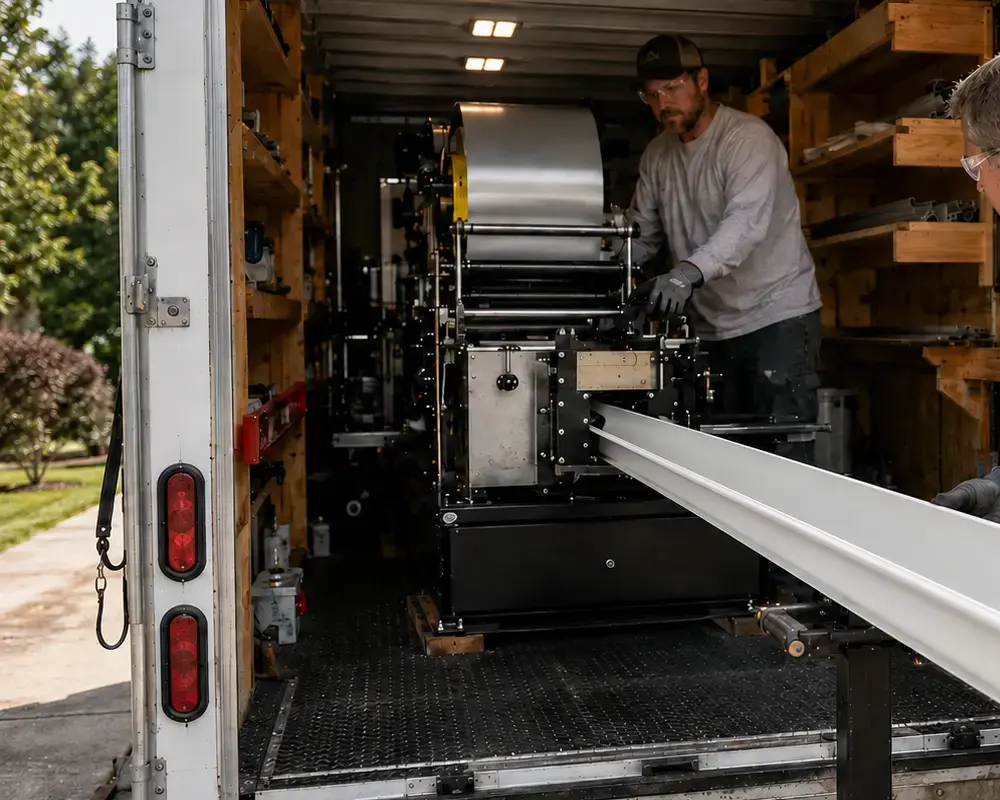
Six-inch gutters are not a universal cure. The installer still needs to plan outlet openings, downspout quantity, fasteners, fascia attachment and the route water follows at ground level. For a detailed comparison of capacity factors, see the CYM guide to 5-inch and 6-inch seamless gutters.
Downspouts determine whether added capacity can leave the gutter
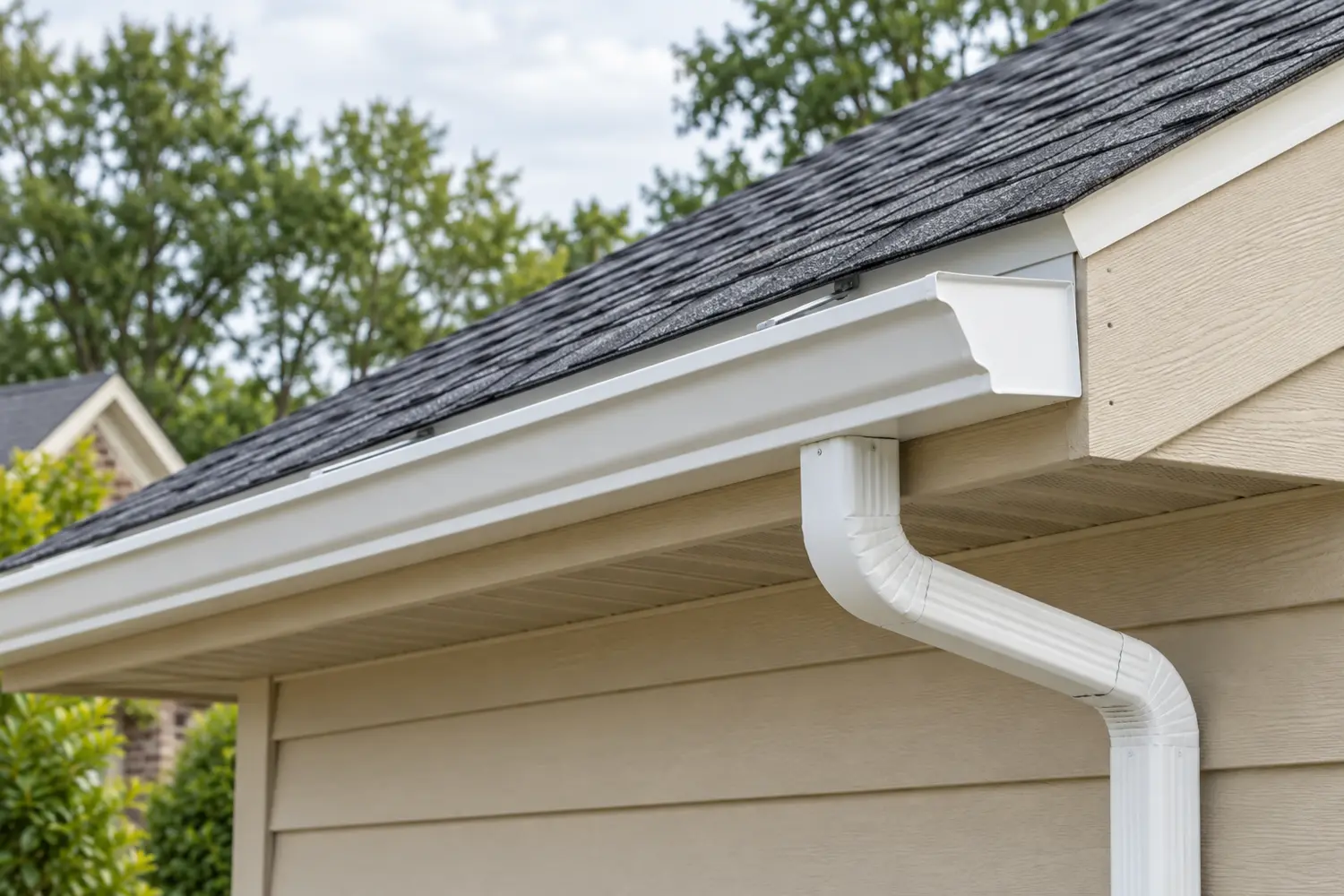
A gutter can collect more water only if the outlets and downspouts can move that water out. One undersized or poorly located exit can create a bottleneck. Long runs may need more than one outlet, and a high-flow valley may need an outlet positioned on a nearby straight section rather than inside a corner joint.
CYM commonly evaluates rectangular 3×4 downspouts for higher-capacity layouts. The important details are the complete route: the gutter outlet, two correctly formed transition elbows where needed, a straight vertical section and a discharge point that does not simply return water to the house.
Overflow does not always mean the gutter is too small
Before paying for a full replacement, identify when and where the water escapes. A broad spill along a dirty run suggests a different problem from concentrated overflow below a valley during a strong storm.
- Overflow near one outlet: check for a blocked outlet or elbow.
- Water remaining after rain: inspect pitch and low spots.
- Water behind the gutter: inspect roof-edge alignment, attachment and fascia condition.
- One valley overshooting: review concentrated flow, gutter placement and the nearest outlet.
- Loose or sagging run: address fasteners and the supporting fascia before discussing size.
If the gutter is damaged or pulling away, review gutter repair in Chapel Hill. If debris is limiting flow, start with professional gutter cleaning in Chapel Hill rather than assuming the entire system needs replacement.
How tree cover and gutter guards affect the decision
Chapel Hill’s tree-lined properties can put leaves, pine needles, pollen and small debris into the same high-flow sections created by roof valleys. Guard selection should follow the actual debris and roof conditions. A guard can reduce material entering the trough, but it does not increase the capacity of an undersized outlet or correct a poor discharge path.
Before adding protection, confirm that the gutter is secure, pitched correctly and draining through open outlets. Homeowners comparing products can review gutter guards in Chapel Hill.
What a Chapel Hill gutter estimate should include
A useful estimate should explain why a size and layout are being recommended. It should not rely only on the number of stories or the total square footage of the house.
- Measure each gutter run and identify the roof area feeding it.
- Locate valleys, inside corners and other concentrated-flow points.
- Review fascia condition and the proposed attachment surface.
- Specify 5-inch or 6-inch K-style gutter by section.
- Identify outlet quantity, downspout size and proposed locations.
- Discuss where each downspout will discharge at ground level.
- Separate cleaning, repair, guard and replacement work in the scope.
The practical decision
Choose 5-inch gutters when the measured roof sections and outlet layout support them. Consider 6-inch gutters where the roof produces higher concentrated demand. In either case, require a plan for outlets, downspouts and discharge. The best system is not the largest gutter; it is the complete layout that moves water reliably away from the roof edge and property.
Frequently asked questions
Are 6-inch gutters always better for Chapel Hill homes?
No. A correctly planned 5-inch system can serve many homes. Six-inch gutters deserve consideration when large or steep roof areas, long runs, valleys or concentrated runoff place more demand on a section.
Can a larger gutter fix overflow by itself?
Not always. Leaves, blocked outlets, poor pitch, too few downspouts or valley concentration can cause overflow even when the gutter is large.
Do 6-inch gutters need 3×4 downspouts?
A 3×4 rectangular downspout is commonly paired with higher-capacity systems, but quantity, outlet placement and discharge location matter along with size.
How can I choose the correct size for my home?
Request an onsite evaluation that reviews each roof section, run length, valleys, outlets, downspouts, fascia, tree debris and practical discharge points.
Get a gutter layout planned for your Chapel Hill home
CYM Contractors can measure the roof edge, compare 5-inch and 6-inch options, and explain the outlet and downspout layout before work begins.
Request a Free Estimate or call (919) 308-0106.